Solar Panels for UK Data Centres — Tier III/IV-Compatible Installs
Solar PV for hyperscale, colocation, edge, enterprise, cloud and HPC data centres: what a flat 24/7 load does to the economics, the G99 and continuity questions to settle first, and matched quotes from installers who work on critical-power sites.
- Independent guide
- Sourced 2026 data
- No installer agenda
- Matched quotes
ACCREDITED FOR DATA CENTRE WORK






The economics of on-site solar for UK data centres in 2026
UK data centres consume around 12 TWh of electricity per year and the figure is rising fast — IT load growth from AI training and inference is forecast to add 4–6 TWh by 2030. Hyperscale tenants (Microsoft, Google, AWS, Meta) all have published 100% renewable commitments and increasingly insist on hourly carbon-free energy (CFE) matching, not just annual offsets.
On-site rooftop PV alone rarely covers more than 5–15% of a UK data centre's annual load — the constraint is roof area, not demand. But because data centres run a flat 24/7 IT baseload, every kWh of on-site solar is self-consumed: there is essentially no export, no battery cycling penalty, and no payback degradation from over-sizing. That makes data centre solar the lowest-LCOE megawatt-hours on a UK rooftop today — typically 3–5p/kWh versus 18–32p/kWh grid retail.
The 5–15% on-site contribution then combines with a corporate PPA (covering the remaining 75–95%) to deliver the audit-ready Scope 2 evidence pack that hyperscale customer SLAs now require. We design, install and document the on-site portion to Tier III/IV continuity standards, and we introduce operators to PPA originators for the remainder.
- Tier III/IV continuity through the install is the first thing to check in any installer’s method statement.
- A customer-audit evidence pack (PVSyst yield, methodology, commissioning certificates) should come with every install — ask for it in the quote.
- Ask every installer for BPSS clearance in advance — security-cleared sites do not wait for retrospective checks.
- Corporate PPAs cover the 75–95% of load on-site PV cannot — the comparison is on the PPA page.
Solar panels for data centres: the specialist difference
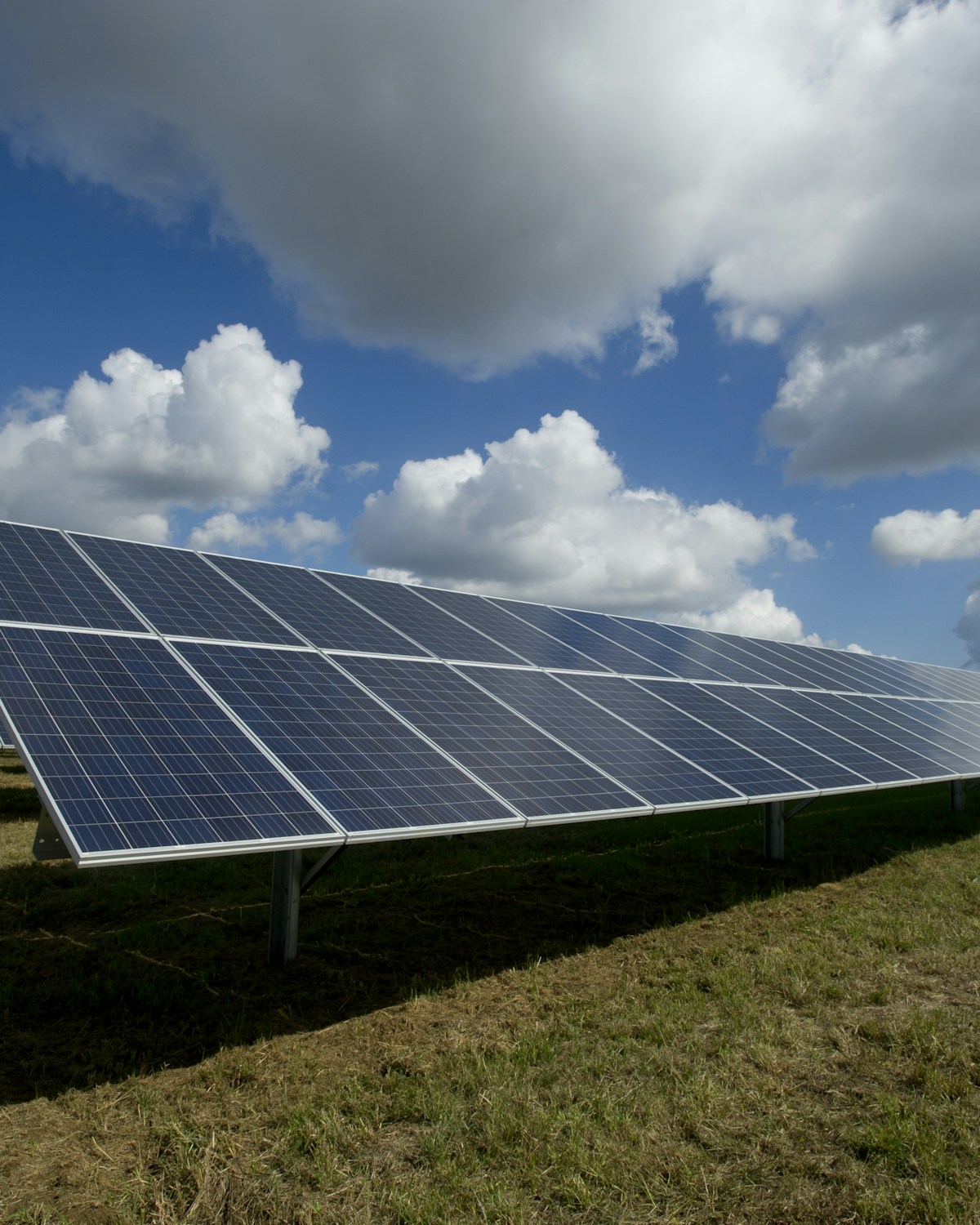
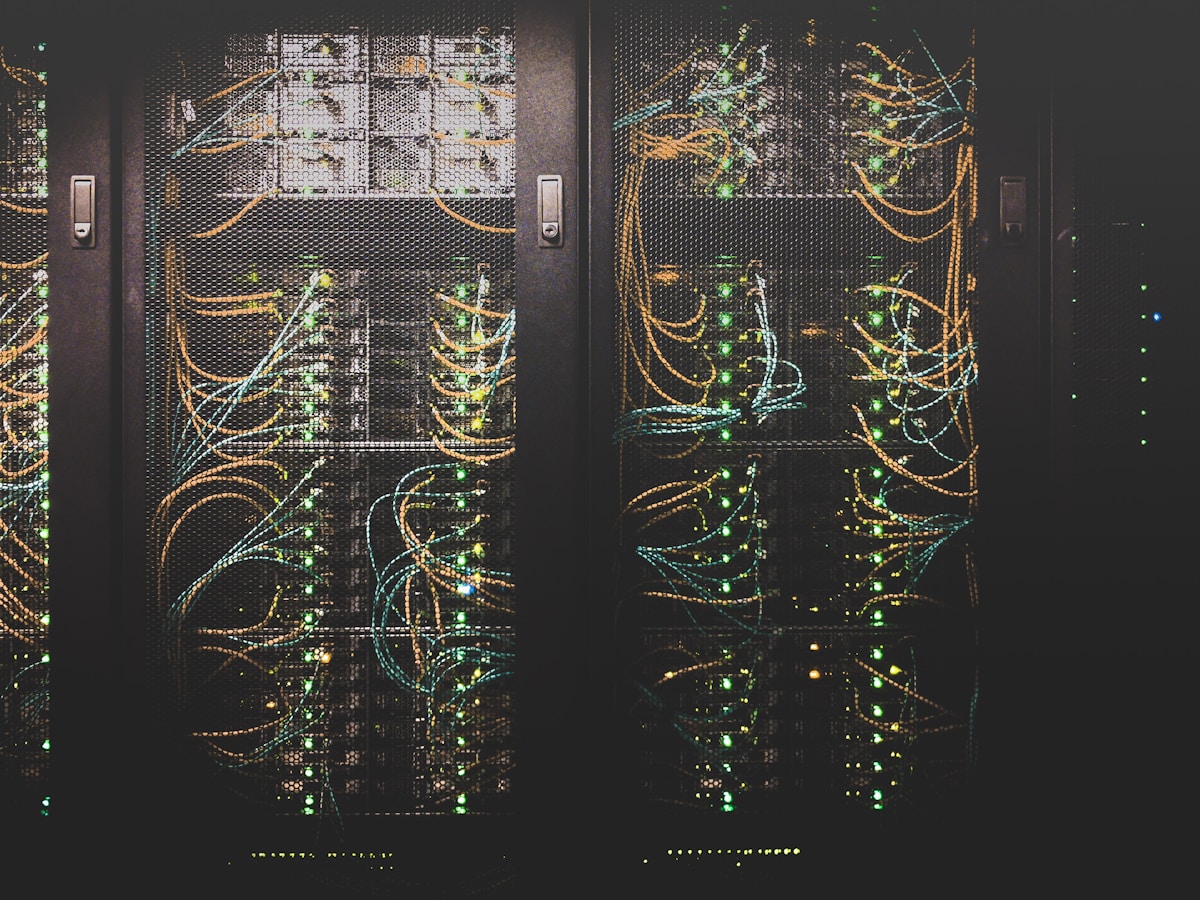
We are a supplier-neutral, data-centre-dedicated solar installer — we are not a generalist commercial firm with a data-centre page, and we hold no panel-brand or PPA-provider tie. On-site rooftop and canopy PV covers 5–15% of a data centre's annual load at close to 100% self-consumption (the flat 24/7 IT baseload absorbs every kilowatt-hour), giving an on-site cost of energy of roughly 3–5p/kWh against 18–32p/kWh grid retail — the lowest-cost megawatt-hours available on any UK rooftop. The hard part is never the panels; it is delivering them without breaching a Tier III/IV uptime SLA. That is the discipline we are built around.
Data centre solar cost & payback (UK, 2026)
Indicative all-in figures for a self-consumed rooftop/canopy array on a UK data centre. 100% first-year relief via the Annual Investment Allowance (to £1m; 50% FYA on special-rate spend above) typically removes ~25% of the effective capex, pulling post-tax payback to 3.5–5 years.
| System size | Indicative capex | Annual saving | Simple payback | Post-tax payback |
|---|---|---|---|---|
| 250 kWp (edge / enterprise) | £210k–£310k | £45k–£60k | 4.5–6.5 yr | 3.5–5.0 yr |
| 500 kWp (colocation) | £375k–£525k | £85k–£115k | 4.5–6.0 yr | 3.5–4.5 yr |
| 1 MWp (large colo / campus) | £750k–£950k | £170k–£210k | 4.0–5.5 yr | 3.0–4.5 yr |
| >1 MWp (hyperscale phase) | £1.1M–£1.8M | £230k–£400k | 4.0–5.0 yr | 3.0–4.0 yr |
Figures are typical 2026 ranges and vary with roof/canopy area, irradiance, grid rate and DNO constraints. See the full method on our data centre solar cost and payback page, or how we install around live load on Tier III/IV resilience and manage G99 grid connection.
UK data centre solar in 2026
From feasibility study to commissioning in 9–18 months
What a data-centre solar programme looks like when the installer designs it around your operations, from desk feasibility to commissioning.
- 01Week 1–3
Desk feasibility + customer audit alignment
The installer pulls your half-hourly meter data, roof and structural drawings and confirms what your hyperscale or enterprise customer SLAs require for renewable evidence. Indicative system size, generation forecast, and Scope 2 contribution within 14 working days.
- 02Week 4–10
Engineering survey + insurer pre-design review
Structural engineer assesses roof and weight loading. Electrical engineer maps integration with your existing dual-path supply, UPS, and generator interlocks. Insurer reviews and signs off design before contract.
- 03Month 3–8
Planning, G99 DNO, customer comms
The installer confirms permitted development under Part 14 Class J (most DC roofs qualify; prior approval on design and glare above 50 kW), submits the G99 application (rarely capacity-constrained for DCs), and agrees the customer-facing comms plan if your operator runs an audit committee.
- 04Month 8–18
Install + commissioning under continuity
Security-cleared crews — ask for BPSS in advance. Roof work occurs above the white space — zero impact on operations. Final grid connection designed with dual-path failover so primary feed continuity is uninterrupted.
Specialists across every UK data centre format
Each sub-vertical has its own profile — sizing envelope, payback maths, compliance regime, customer audit standard. Pick yours.
 Largest segment
 Hyperscale Data Centres
1–5 MW (rooftop) + ground-mount potential to 10+ MW. 7-year payback. £700,000–£8m+.

Colocation Data Centres
300 kW–3 MW. 6.5-year payback. £210,000–£2.4m.

Edge Data Centres / Telco POPs
50–300 kW. 7-year payback. £45,000–£270,000.

Enterprise / On-Premise Data Centres
100 kW–1 MW. 6.5-year payback. £90,000–£800,000.

Cloud Provider Data Centres
500 kW–5 MW. 6.8-year payback. £350,000–£4m+.

HPC and AI Data Centres
800 kW–8 MW. 6.3-year payback. £560,000–£6.4m+.

1.6 MW rooftop install on a Slough colocation data centre
A 12 MW colocation data centre owned by a major operator with hyperscale and enterprise customers. Customer SLAs reference renewable energy supply. 12,000 sqm flat membrane roof. Tier III operational standard.
Data centre solar specialist vs generalist commercial installer
| Data-centre-experienced installer What to look for | Generalist commercial installer Industrial / warehouse only | In-house FM team Self-managed | |
|---|---|---|---|
| Tier III/IV continuity engineering during install | |||
| BPSS / NPPV3 security cleared crews | |||
| Customer SLA renewable evidence pack | |||
| PVSyst yield + Scope 2 methodology aligned to SBTi/CDP | Sometimes | ||
| Insurer pre-design review on every project | |||
| Dual-path grid connection design | |||
| PPA originator introduction service | Sometimes | ||
| ISO 27001 aligned project delivery | |||
| 10-year IWA insurance-backed warranty | Sometimes |
On-site PV across every major UK data centre cluster
From Slough's Thames Valley hyperscale corridor to Newport's South Wales growth zone — we operate UK-wide. Tap any cluster for local power, planning, and customer-context detail.

Slough
A 750 kW rooftop PV installation commissioned in 2025 on a Slough Trading Estate colocation facility. First-year generation of 670,000 kW…

London
A 420 kW rooftop PV system commissioned in 2024 on a Docklands colocation building delivers 370,000 kWh annually into 24/7 IT load. At a …

Manchester
A 380 kW rooftop PV system on a Manchester data centre campus (Trafford Park, 2025) generates 335,000 kWh annually into 24/7 IT load. At …

Newport
A 320 kW rooftop PV system on a Newport data facility (Celtic Springs, 2024) generates 284,000 kWh annually. At the operator's 19p/kWh ra…

Cardiff
A 390 kW rooftop PV system commissioned in 2025 on a Cardiff Gate data centre generates 344,000 kWh annually into flat IT load. At the op…

Cambridge
A 450 kW PV system commissioned in 2025 on a Cambridge Science Park HPC facility generates 402,000 kWh annually into a flat 24/7 AI train…
Trusted by UK hyperscale, colocation and telco operators
They were the only installer we shortlisted with a coherent plan for Tier III continuity through commissioning. Final grid connection happened over a planned maintenance window with zero customer-facing impact.
The audit-ready evidence pack made our customer renewal conversations a 20-minute exercise instead of a 3-month one. Three hyperscale tenants signed off on the methodology without revision.
Rolled out an 8-site edge programme through them — single design, eight identical commissioning packs, ENA G99 handled centrally. Twelve months from PO to all sites live.
Common questions from data centre operators
The questions we hear most from heads of facilities, sustainability leads, and critical environment directors.
How much do solar panels for a data centre cost in the UK?
Hyperscale and large colo (1–5 MW): £700k–£8m+. Mid-colo (300 kW–3 MW): £210k–£2.4m. Edge (50–300 kW): £45k–£270k. Cost per kW typically £700–£900 above 1 MW, £750–£950 for 300 kW–1 MW range. Capital allowances cover 75–85% of effective net cost.
What percentage of our data centre load can solar realistically supply?
Rooftop alone typically 5–15% of total annual load. Combined with adjacent ground-mount on owned land (where available), 10–25% achievable. The remaining 75–95% is typically supplied via corporate PPA, on-site CHP (where applicable), or grid imports under a green tariff. Most major UK operators run a portfolio approach.
How do we install without affecting Tier III/IV operational continuity?
Roof installation happens above the white space with zero impact on operations. Final grid connection is designed to integrate with your existing dual-path infrastructure — primary feed continuity maintained throughout. We've delivered 1.5 MW at a Tier III hyperscale facility with zero downtime.
Will solar satisfy our customer SLAs that reference renewable energy?
Yes — and it's typically the strongest evidence available. Microsoft, Google, AWS, Meta, Apple all explicitly prefer bundled/on-site renewables over unbundled REGOs. We provide an audit-ready evidence pack including PVSyst yield model, MCS certification, generation reports, and Scope 2 calculation methodology.
What about combining solar with battery storage?
Increasingly common at data centre scale. Battery storage provides: (1) grid services revenue (Dynamic Containment, Capacity Market), (2) peak shaving for DUoS triad management, (3) backup capacity reducing UPS cycling, (4) PPA-style supply smoothing. Typical sizing: 1–4 MWh battery alongside 1–3 MW PV.
What about the embodied carbon of the panels — does the lifetime maths really work for us?
Yes, decisively. Modern crystalline silicon panels have an energy payback period of 1–2 years in UK conditions. A 2 MW data centre PV install displaces 25–40 times its embodied carbon over a 25-year life. IEA PVPS Task 12 lifecycle assessments are the authoritative source — we share these in the audit pack.
Sizing the numbers for an asset? Our sister site covers our commercial solar payback calculator in depth.
Data centres pair on-site generation with storage to improve PUE and resilience, and Tier III/IV facilities increasingly specify commercial battery storage systems for load-shifting and backup.